Which path waits for the approved sale
You buy Meta traffic to an affiliate lander. The form submits, the confirmation page loads, and the pixel fires Purchase while the network still has the lead on hold. Hours can pass before that lead is approved, held, or rejected.
Send Purchase from the tracker once the postback records the result you want Meta to learn. Use the Conversions API Gateway when those pixel events should have a server copy and hosting your own container is a separate project.
If the pixel and a server event both describe that sale, Meta's published spec is what decides whether they collapse into one conversion.
“For the same customer action, the browser event_name must match the server event_name, and the Pixel eventID must match the server event_id.”
“If a server and browser event arrive at roughly the same time (within 5 minutes), Meta favors the browser event.”
See which starter plan includes Conversions API
Quick answer
- Conversions API Gateway. Best for a server copy of pixel events on the lander.
- Tracker postback. Best for a Purchase that follows the conversion the network reported.
- Hosted checkout. Best for an order you charge yourself, sent when that payment succeeds.
What fires the Meta event
Three routes can post a Purchase. They part ways on the message that kicks off the event. That matters when the affiliate network confirms the commission after the confirmation page has already loaded.
| Route | Trigger | Approval | Fits | Double count |
|---|---|---|---|---|
| Conversions API Gateway | The Facebook pixel firing on the page. | It follows that page event. The network status arrives on its own channel. | A lander whose pixel events should have a server copy. | The pixel and the server copy need one shared id. |
| Tracker postback | RedTrack, ClickMagick, or Voluum posts after the network calls the postback URL. | Whichever status that URL reports. | The payable result comes after the click. | Turn off the pixel redirect while the API postback is on. |
| Hosted checkout | ElasticFunnels posts a server Purchase with value and currency on a paid order. | Meta hears about the order when that payment succeeds. | You charge the buyer on a checkout you host. | A browser Purchase on the same order still needs the shared id. |
Voluum's Facebook guide states a domain rule that covers all three routes. Meta registers a conversion on a domain the advertiser owns. The offer URL belongs to the network. The page you host is the domain you can verify.
The lead the network has not paid
The click lands, the form submits, and the confirmation URL loads. The network's decision is a later record. Ads Manager can show a purchase the offer never pays.
The purchase gap calculator puts Ads Manager purchases next to the sales the network approved, held, or rejected. A gateway tied to the pixel reports the page. A tracker can wait, because the postback is the message that updates the conversion.
What the Conversions API Gateway sends
The Conversions API Gateway is a hosted pipe in Events Manager. It watches the pixel and posts a server event when that pixel fires. Stape's helpdesk, written as a Meta partner, puts the trigger in one line.
“It means that every time when CAPIG sees event triggered by FB pixel, it sends server events.”
The same publisher's overview limits the product to data that existing web events already send. A later note says the gateway relies on Facebook web pixel events to start those server events. A BuyGoods approval, a ClickBank postback, or a hold status never arrives as a pixel event, so the gateway has nothing to mirror.
A media buyer who installed the gateway reported that an fbq call then reaches Meta on the browser path and the server path together. Custom events followed that split. Both copies show up in Events Manager's test events, and they still need the shared id in that spec.
Meta CAPI Gateway vs server-side tracking
Meta CAPI Gateway vs server-side tracking is a hosting question. The gateway stays on Meta, and it still starts from the pixel. A server container you run can take that same page event and fan it out to other ad platforms.
Read Meta Conversions API through Google Tag Manager or a tracker for the container itself, and for when that container sits next to a tracker. How the Facebook pixel and Conversions API each report a conversion covers what the browser tag stores and how the server event lines up with it.
How the tracker sends after the postback
The tracker stores the click id on the lander. The network calls back with that id once it has a conversion to report. The Conversions API call goes out after that record exists. A confirmation-page load is a different trigger.
Build the URL with the click id and the payout macros the tracker documents. The postback builder lays out those macros. Write the URL for the commission you want in Ads Manager. When that URL is the payable result, the Meta event can match the money you keep. When it runs on every lead, Ads Manager hears about the lead.
“The last step is to create a postback URL and submit it as the traffic source postback URL in the Facebook Traffic Source element of your Voluum account.”
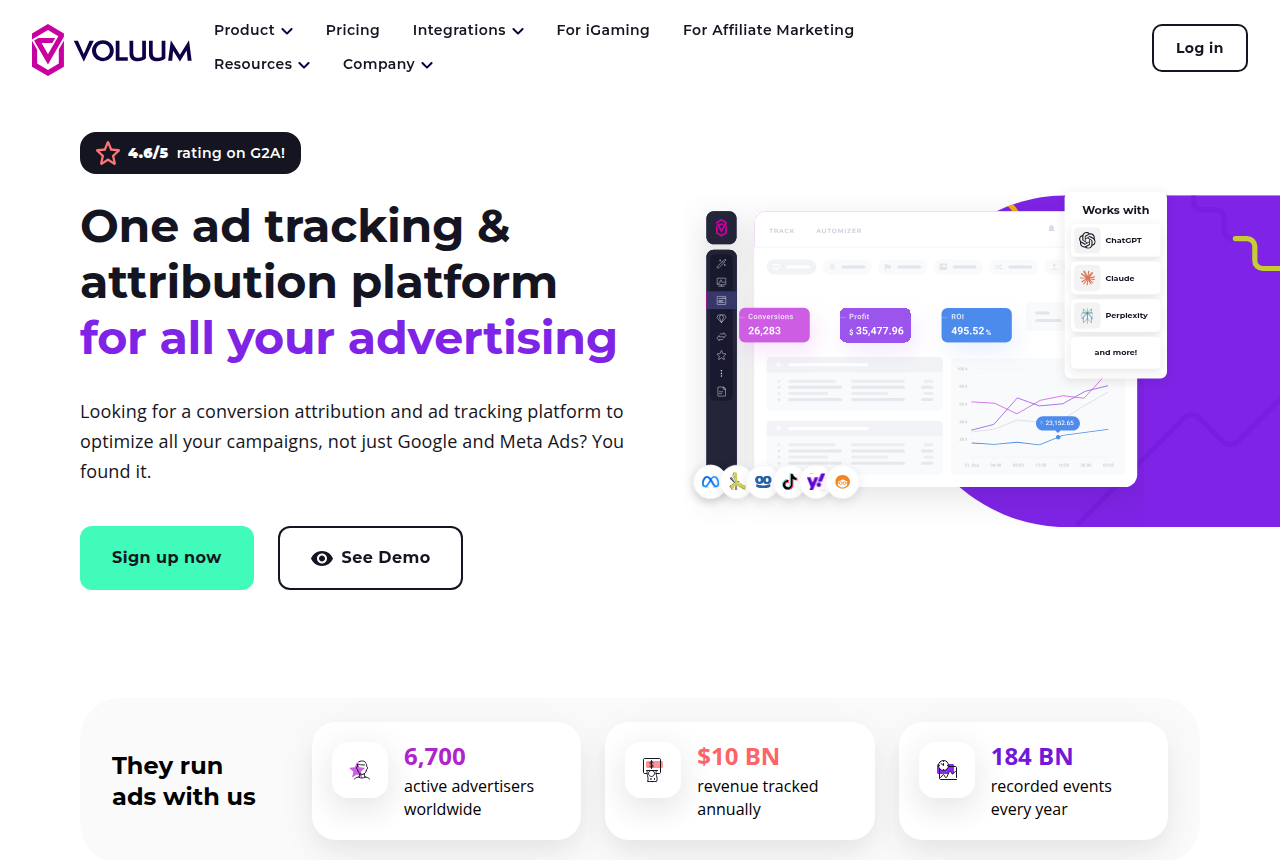
Voluum's integration connects the Pixel ID, the Conversions API token, and a verified domain, then generates that postback URL for the Facebook traffic source. The same guide says to turn off the Pixel Redirect URL while the conversion API postback is on, because leaving the redirect on sends the conversion a second time. The Voluum review covers the plans and the trial.
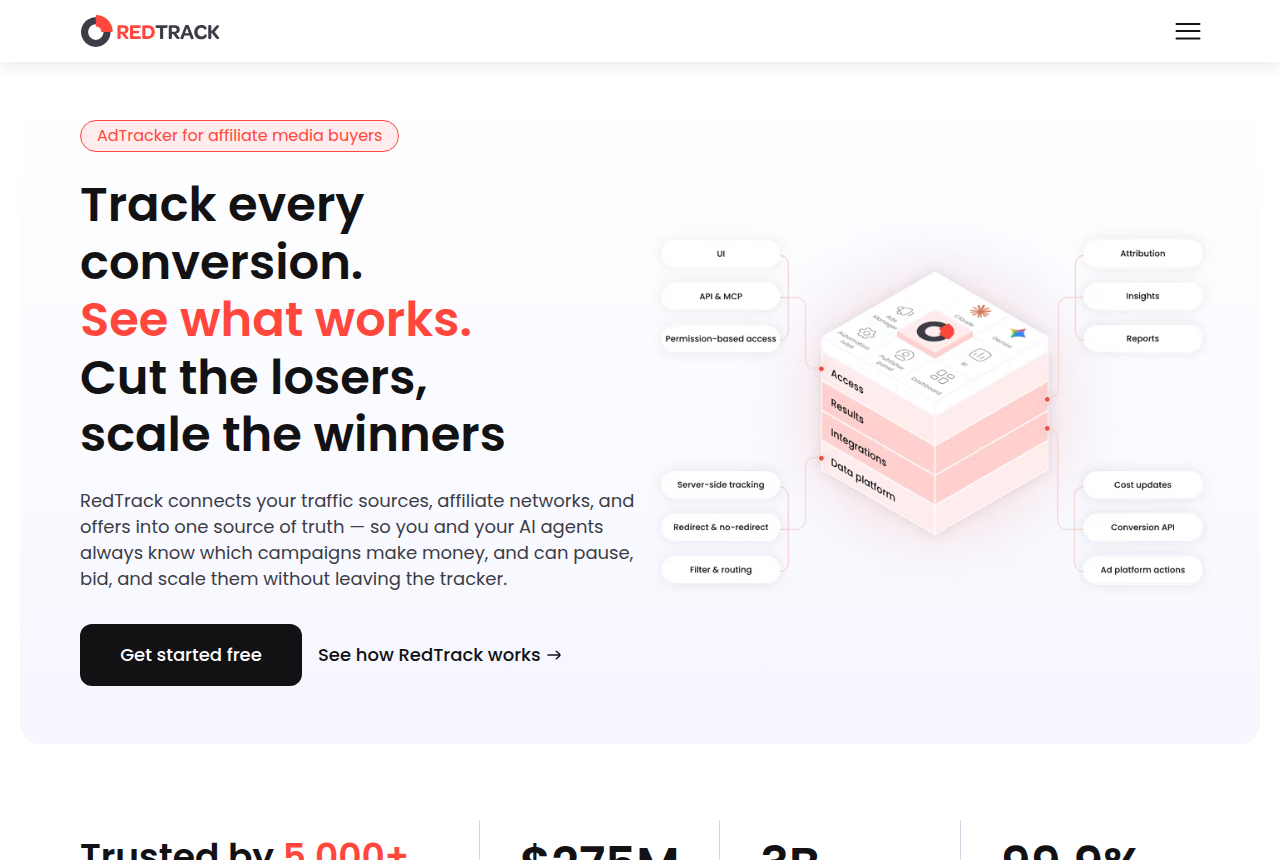
RedTrack's Facebook tracking page describes a pre-built Conversions API integration that sends online and offline conversion data back to Meta, attributed to the ads. The RedTrack review covers the plan and the trial around that integration.
AffClix's Meta integration page publishes one approved-only rule. Pending commissions, rejected commissions, and commissions the network later reduces stay in the tracker. Meta does not get those rows. Treat that page as the pattern. RedTrack, ClickMagick, and Voluum document their own integrations, and the URL you install is the control those pages put in your hands.
Where each route helps, and where it breaks
Conversions API Gateway
Pick the gateway when the pixel event on a page you host is the event you want Meta to learn, and you want the server copy without running a container. It will also report a confirmation-page Purchase while the lead is still pending.
What works
- The pixel event is the trigger, so there is no container to provision.
- A media buyer who installed it reported that an fbq call then reaches Meta on the browser path and the server path.
What to watch
- The server event follows the page event. A BuyGoods or ClickBank approval that arrives later is a different message.
- The browser copy and the server copy need one shared id, or Ads Manager can count two sales.
Tracker postback
Pick the tracker when the payable event is the network's decision. The postback URL is the message that carries that decision.
What works
- The Meta event can follow the conversion the postback wrote onto the click.
- RedTrack documents a pre-built Conversions API integration, and ClickMagick lists Audience Optimization / CAPI on Starter.
What to watch
- The Meta event waits for that postback. A late or missing call means Meta hears late, or not at all.
- Voluum says to turn off the Pixel Redirect URL while the API postback is on, or the sale goes out twice.
What buyers report about the two copies
People who install the gateway see two deliveries of the same fbq call. The browser event and the server event both leave when that call runs, which helps when the browser copy is blocked and the server copy still arrives. It is the wrong moment when the event name is Purchase and the network has not decided.
The approved-only pattern, on the AffClix page above, keeps pending and rejected rows in the tracker. They stay out of the Purchase Meta optimizes toward. Match quality still depends on the click id surviving from the lander to that postback, and on the domain you verified.
My take
I would let the tracker post Purchase after the offer confirms the result I want in Ads Manager. I would use the gateway to mirror pixel events from Meta's side, and leave a tagging container for a setup that also has to reach other ad platforms. For a checkout I host, the payment is the moment that server Purchase should leave, with one id if the pixel fires too.
Which starter plan includes the Meta integration
Gateway hosting sits with the pixel. It is a different bill from a tracker subscription. On the tracker side, look at which starter plan already includes the integration.
RedTrack includes a native Conversions API for Meta on every affiliate plan, including Solo. Plans and the trial are on the RedTrack pricing page.
Affiliate tracker
RedTrack
- Price (17 Oct 2026)
- $141/mo annual
- Conversions API
- On Solo
The postback can be the moment Meta hears about the sale.
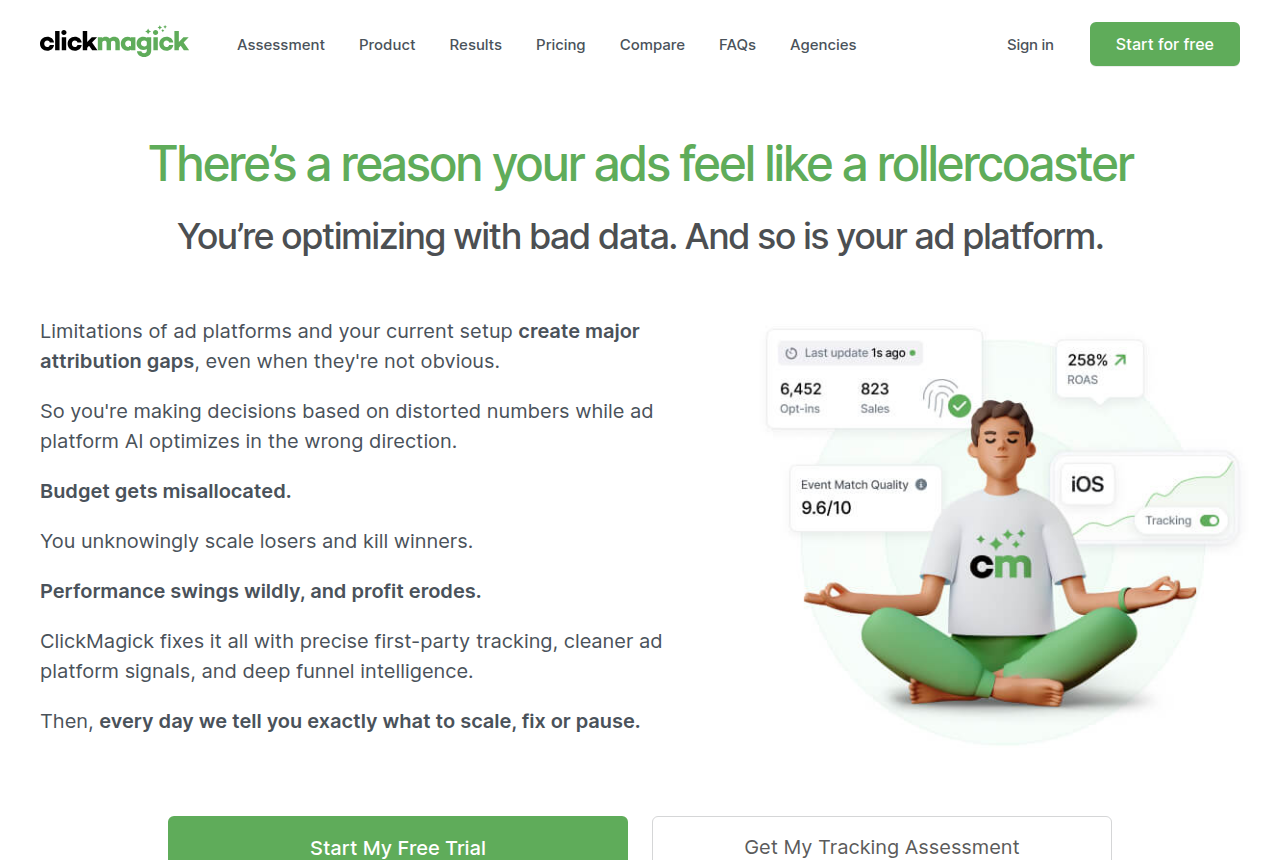
ClickMagick lists Audience Optimization / CAPI on Starter, beside the visitor allowance on that plan. The trial and the refund window are on the ClickMagick pricing page.
Affiliate tracker
ClickMagick
- Price (20 Oct 2026)
- $79/mo
- Starter
- Audience Optimization / CAPI
One ad account per platform, inside the visitor allowance.
When the checkout you host sends Purchase
ElasticFunnels is a funnel platform for teams that run paid traffic. It builds the pages, split-tests variants under one URL, and hosts the checkout, so the click and the paid order share one record. The attribution on that record is why it belongs in this choice: when you charge the buyer here, the paid sale goes to Meta as a server Purchase with the order value and currency, along with fbc and fbp, even if no pixel fired in the browser.
The Meta Ads page says that if the page also fires a browser Purchase, Meta receives both. Use the same id on both so Meta can deduplicate them. The event fires when the checkout payment succeeds.
Inbound postbacks from BuyGoods, ClickBank, and JVZoo record the network sale, the refund, the chargeback, and the rebill on the click. Those rows live on their own record. The pixel copy a gateway makes on a lander hosted somewhere else is a separate event.
Every feature is available on every plan, including that server Purchase. Pages, funnels, and a custom domain can be set up during the trial.
Funnel platform
ElasticFunnels
- Price (17 Oct 2026)
- $97/mo
- Trial
- 14 days, no card
The hosted checkout sends Purchase after payment.
ElasticFunnels is newer than the platforms buyers compare it with, and there is very little independent review coverage of how the Meta event is timed. Until you run real volume through it, those postback and Purchase details are largely the vendor's word. The product has been on the market since 2023, which is why the outside write-ups are still thin. Pages, the same-URL test, and the checkout remain on the account while you judge that documentation.
Compare the two funnel platforms in ElasticFunnels vs ClickFunnels. Read the ElasticFunnels review for the rest of the platform.
Changelog
- On 21 October 2026, the first version set the Conversions API Gateway next to the tracker postback and the hosted checkout.
Questions
Does the Conversions API Gateway wait for an approved affiliate sale?
How does Meta CAPI Gateway compare with server-side tracking?
Can the gateway and a tracker both send Purchase?
Which postback status reaches Meta?
What we read
Voluum's Facebook conversion integration documents the postback URL and the pixel redirect. RedTrack's Facebook tracking page describes the pre-built Conversions API, and ClickMagick's pricing page lists Audience Optimization / CAPI on Starter. ElasticFunnels' Meta Ads page and the affiliate tracking docs cover the checkout Purchase and the inbound network postbacks.
Stape's note on custom events, the gateway overview, and the note on events the gateway misses are the partner pages for how the pipe starts. Meta's server-side API spec is the deduplication rule. AffClix's Meta integration page is the approved-only example.
Related reading
- Meta Conversions API through Google Tag Manager or a tracker
- How the Facebook pixel and Conversions API each report a conversion
- Send the network sale to Meta after the click
- Which starting plan sends sales to Meta and Google
- Ads Manager purchases against network-approved sales
- Build the network postback for your tracker
- RedTrack review
- ClickMagick review
- Voluum review
- ElasticFunnels review
- RedTrack pricing and trial
- ClickMagick pricing and trial
See which starter plan includes Conversions API
Written by
Nadia Lindqvist
Affiliate tracking
Nadia covers affiliate tracking software for people who buy Meta and Google traffic. She reads vendor pricing pages, documentation and long-term user reports, and she writes about which tracker fits a given buyer.
Last checked 2026-10-21
Comments
No comments yet. Questions and your own experience are welcome.
Thank you. Your comment will appear once it has been reviewed.