Facebook pixel vs Conversions API
Ads Manager can show a purchase your network never paid, and it can miss the sale when the buyer is on a phone or the landing page tag never runs at checkout. Keep the Meta Pixel on that landing page. Send the sale through the Conversions API from the server that saw the order, and use one shared event id when both fire.
If the landing page and the checkout are already on one platform, that pricing page is the next step.
What the Meta Pixel sends
The pixel is JavaScript on pages you control. When the tag is allowed to run, it records standard events such as PageView and Purchase, and it sets the _fbp and _fbc cookies.
A blocker, a strict phone browser, or a buyer who never returns to a tagged page leaves the event unsent. People buying Meta traffic describe the practical version of that gap: the pixel looks fine on desktop, and phone sessions on iOS and Android show little or no event data. The path they point to, once the browser goes quiet, is a server send.
The purchase column in Ads Manager is whatever Meta received. A tag can count a lead the network later rejects, holds, or never pays. The research method states how this site treats a pixel count that the network never pays.
What the Facebook conversion API sends
The Facebook conversion API is the server path into the same pixel dataset. Meta's published server-side spec says advertisers send web events from their servers, those events stay associated with a pixel, and Meta processes them like browser pixel events for measurement, reporting, and optimization.
The call is an HTTPS POST carrying an event name, an event time, user data, an action source, and, on a purchase, a value. Because the request leaves a server, the sale can be reported after the buyer has closed the tab, including when the confirmation page never loads your script.
Facebook conversion API vs pixel
Buyers comparing Facebook conversion API vs pixel are asking which system sends the event. The pixel runs in the browser and the conversion API runs on your server, and both arrive in one Events Manager dataset. How the event reaches Meta is the difference between the Facebook Pixel and the Conversion API.
The difference between conversion API and Facebook Pixel comes down to which system sends the request. The conversion API sends it from a server you run, after the person has left the page.
A network postback is a third message. It tells your tracker that a lead was approved, held, or rejected. Meta still expects the conversion on a domain the advertiser owns. Voluum's Facebook conversion guide says every conversion Meta can register has to occur on a domain owned by the user. The offer URL on the network belongs to the network. The landing page you host is the domain you can verify.
Why an affiliate runs both
The pixel stores the cookie and records the on-page events. The server reports the sale when checkout never brings the buyer back to a tagged page. On phones, a browser-only setup misses sales, because the purchase event never fires in the browser.
Firing the browser event and the server event for one sale can inflate the purchase count when the two posts carry different ids. Voluum is specific about one version of that mistake. Turn off the Pixel Redirect URL once the conversion API postback is on, or the sale is reported on each path. The guide says that in the same article as the domain rule.
My take
I would start by keeping the pixel on every landing page I control, and I would use whichever system recorded the order, the hosted checkout or the tracker, to send Purchase with one shared id.
Deduplication inside 48 hours
Deduplication is how Meta folds the two posts into one conversion. The spec matches on event name, and the pixel's eventID has to equal the server's event_id. Meta keeps one of the two for 48 hours, counting the browser event when they arrive within about five minutes and counting whichever came first when they arrive further apart.
ElasticFunnels's Meta Ads page says a checkout sale goes to Meta as a server Purchase with the order value and currency, even when no browser pixel fired. If the page also fires a browser Purchase, Meta receives both. The shared id is what tells Meta those two posts are one sale. Email, name, phone and address are SHA-256 hashed before they leave that server, and fbc and fbp are stored on the click. When the _fbc cookie is missing, fbc is built from the fbclid in the landing URL. Those fields are the match data on that send.
Verify a domain you own
The domain rule above is the affiliate version of the same requirement. RedTrack's Facebook tracking page says verification in Meta is required, and that you verify the domain you will use for the campaign using a meta tag, an HTML file, or DNS. Run that check on the landing page you host.
Where the server send starts
The server event has to come from a system that recorded the sale. That system might be a platform that hosts the page and the checkout, a tracker placed in front of pages you already run, or a tracker plan with a visitor limit.
Page and checkout on one record
ElasticFunnels is a funnel platform for teams that run paid traffic. It builds the pages, split-tests variants under one URL, and hosts the checkout, so the click and the order share one timeline. The Meta piece of that timeline is the server Purchase described above, with value and currency. On the token-only connection, an upsell can go out as Purchase, as a custom event, or be left off the Meta post. You can connect with Facebook Login, which also imports spend, clicks and impressions every two hours, or with a pixel id and a system-user token. The vendor's page says that token path skips Meta app review.
It is newer than the platforms it competes with, and there is very little independent review coverage to check the Meta send against. Until you run real volume through that connection, you are largely taking the vendor's word for it. The platform has been on the market since 2023, which is why those write-ups are still scarce. The account includes the pages, the same-URL test and the checkout.
The peer comparison for the funnel job is ElasticFunnels vs ClickFunnels.
Funnel platform
ElasticFunnels
- Price (17 Oct 2026)
- $97/mo
- Trial
- 14 days, no card
Landing page and checkout on one record, with the sale sent from that record.
A tracker in front of outside pages
When the funnel and the offer pages already live somewhere else, the tracker is the system that saw the click and the later network result. RedTrack's homepage says conversions are routed back to ad platforms via CAPI, so the ad algorithm learns from results. The Facebook tracking page describes a pre-built integration that sends online and offline conversion data back to Meta. RedTrack vs ClickMagick sets that starting price next to a visitor-capped plan. The longer write-up is the RedTrack review.
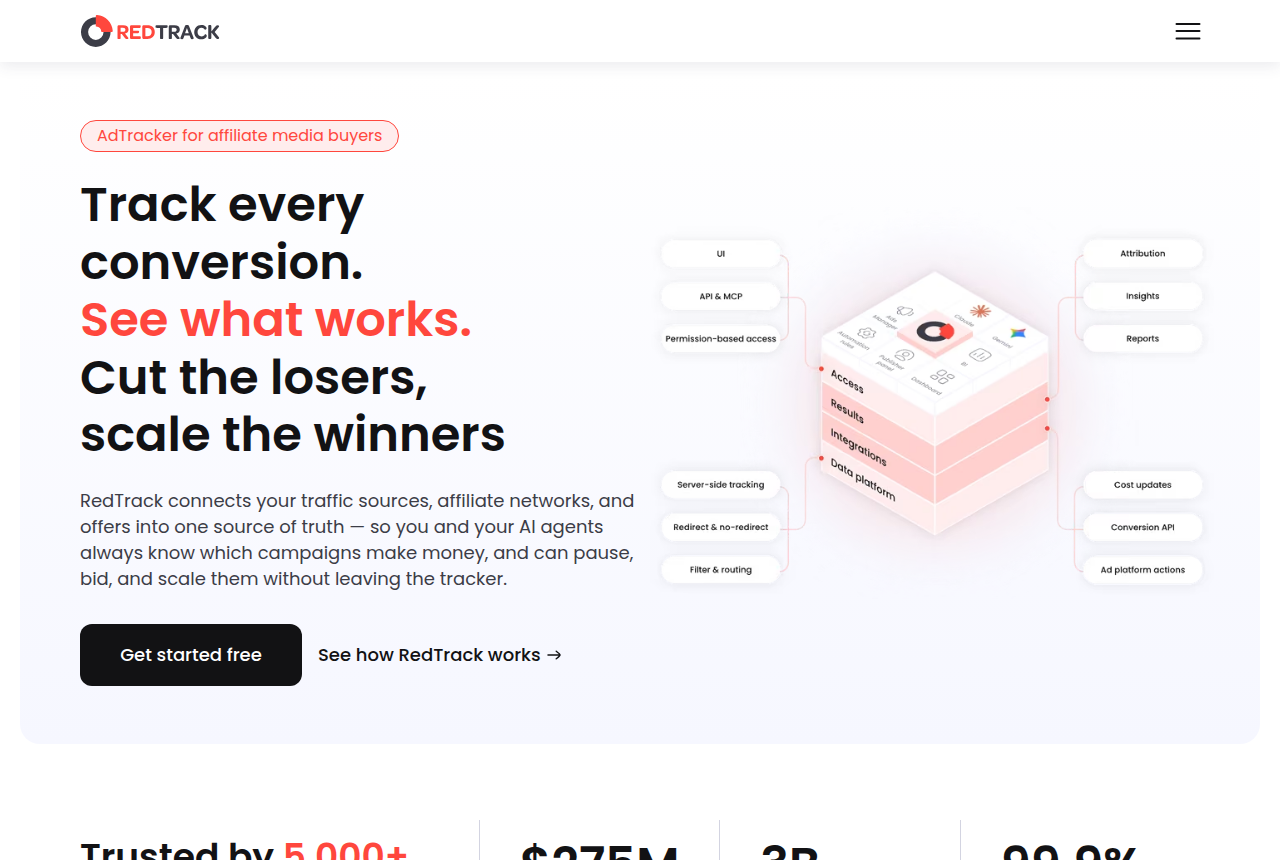
Affiliate tracker
RedTrack
- Price (17 Oct 2026)
- $141/mo annual
- Conversions API
- On affiliate plans
Pages that already live outside a hosted checkout.
One account inside a visitor cap
ClickMagick Starter lists Audience Optimization / CAPI in the plan bullets, beside an allowance of 10,000 tracked visitors. The visitor-cap comparison with Voluum is ClickMagick vs Voluum, and the write-up on this site is the ClickMagick review.
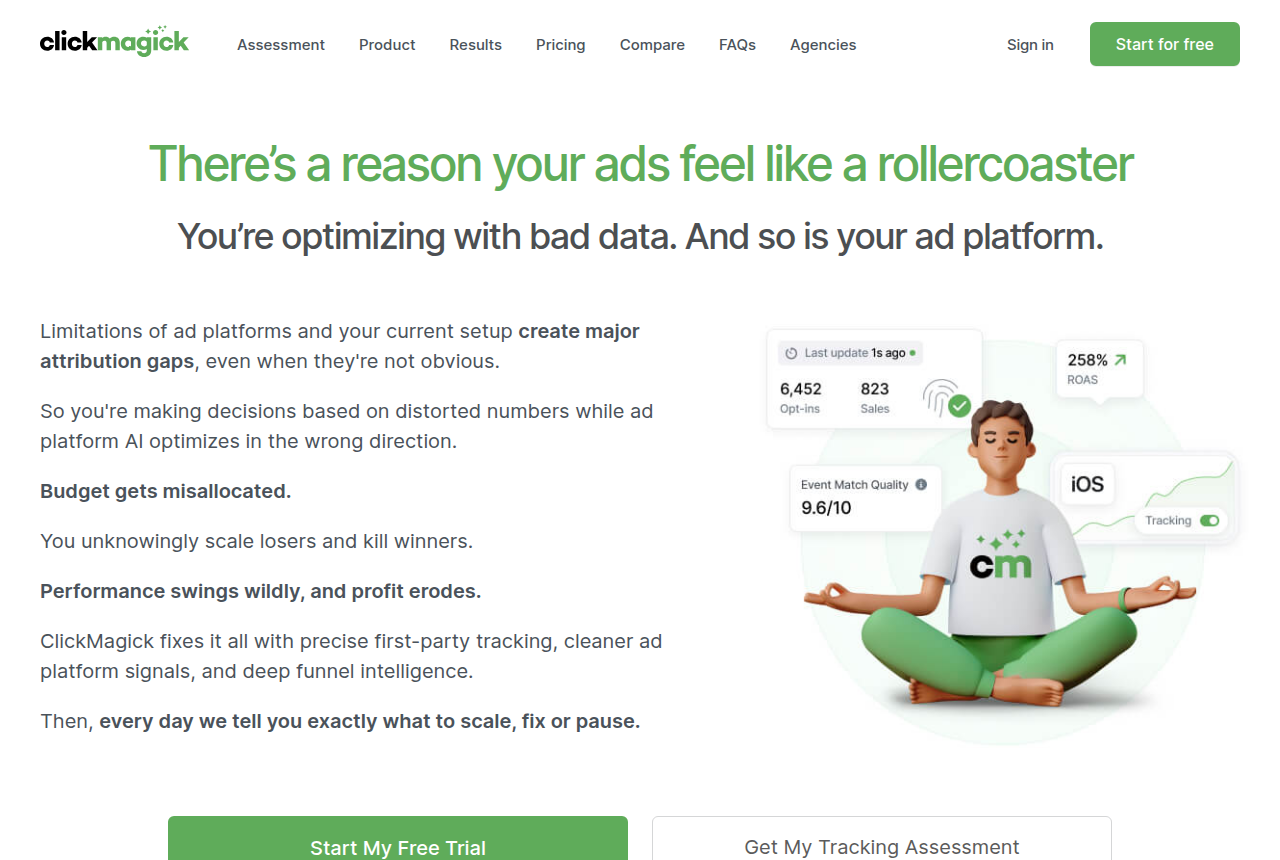
Affiliate tracker
ClickMagick
- Price (17 Oct 2026)
- $79/mo
- Starter
- Audience Optimization / CAPI
One ad account per platform, inside the visitor allowance.
What neither path fixes
Meta optimizes based on the events it receives. A sale the network later holds or rejects can remain in Ads Manager when you already posted it. Put the tracker's numbers beside Ads Manager and read the two together. The ranking orders the tools, and the plan picker maps a month of clicks onto each entry allowance.
A Google click-id upload is a different job from this Meta send. Keep the two setups apart.
Pixel on the landing page, sale from the server
Keep the tag on the landing page, post the sale from the order record, and put that same id on both events. Readers who host the page and the checkout together should open the pricing breakdown.
If those pages stay on another host, use the RedTrack review or the ranking.
What we read
- Meta Conversions API spec
- ElasticFunnels Meta Ads
- Voluum Facebook conversion integration
- RedTrack homepage
- RedTrack Facebook tracking
- ClickMagick pricing
Related reading
- Head-to-heads for a two-tool choice.
- ElasticFunnels vs ClickFunnels
- RedTrack vs ClickMagick
- ClickMagick vs Voluum
- Best affiliate tracking software
- RedTrack review
- ClickMagick review
- How we research
- Which tracker plan your traffic fits
Written by
Nadia Lindqvist
Affiliate tracking
Nadia covers affiliate tracking software for people who buy Meta and Google traffic. She reads vendor pricing pages, documentation and long-term user reports, and she writes about which tracker fits a given buyer.
Last checked 2026-10-17
Comments
No comments yet. Questions and your own experience are welcome.
Thank you. Your comment will appear once it has been reviewed.